ATNZ is committed to being a responsive and flexible training organisation and is producing a series of short courses on demand. These non-NZQA-certified courses are designed to respond to industry requests and provide specialist training to fill immediate skills gaps. We have recently launched the first of these courses, and further short courses will become available throughout the year.
Feel free to search our current options and if you have any requests for training or short courses you need but don’t see, then please chat with your Account Manager or email
We can also offer any unit standards from our 300+ catalogue we are accredited to assess – so let us know what you are interested in and let us talk possibilities.
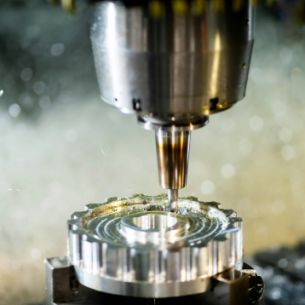
This NZQA-approved, 40-credit micro-credential equips learners with the practical skills and knowledge to work in the mechanical engineering and manufacturing sectors as CNC (Computer Numerical Control) operators, performing the basic functions to safely produce simple components. After successfully completing this micro-credential, learners will be able to safely set up, operate, and carry out preventive maintenance of CNC equipment to produce products that meet required quality requirements.
Why choose this micro-credential?
Industry relevance: Developed by Hanga-Aro-Rau with industry input to meet current skill requirements.
Hands-on training: Gain real-world experience working with CNC equipment.
Flexible learning: Complete each skill standard at your own pace.
Career-ready skills: Develop competency to operate CNC machines safely and produce quality components, opening doors to entry-level roles in engineering and manufacturing.
Education and employment pathways
The programme provides a pathway to the New Zealand Certificate in Mechanical Engineering (Level 3) or New Zealand Certificate in Mechanical Engineering (Trade) (Level 4).
The Micro-credential is designed for existing employees or those who have changed careers and are seeking formal recognition for the role. It may also be used by those who are new to working in the mechanical engineering CNC industry.
Entry criteria
Learners must be at least 16 years old and employed in, or have supervised access to, a workshop with CNC equipment. Domestic enrolment is open to New Zealand citizens or residents living in NZ.
UNIT
TITLE
LEVEL
CREDITS
DELIVERY MODE
40034 v1
Apply health and safety practices in an engineering environment
3
5
On-job
40035 v1
Apply quality assurance and control principles and processes in an engineering environment
3
10
On-job
40036 v1
Carry out preventive maintenance tasks on plant or equipment in an engineering environment
3
5
On-job
40037 v1
Set up and operate computer numerical control (CNC) machinery in an engineering environment
ATNZ offers over three hundred individual unit standards for purchase, allowing learners and professionals to upskill at their own pace. Our NZQA-approved unit standards are tailored to meet the demands of the engineering sector. Purchasing these provides practical skills, enhances qualifications, and strengthens competitiveness in a fast-evolving industry. These are perfect for continuous development and career advancement.
While we work on publishing our full list of unit standards, please click on the enquiry form below to let us know which Unit Standard you are interested in, or investigate some of our suggested bundles.
The Metalwork Engineering Gateway Programme provides an excellent introduction to engineering and is valuable learning that can be useful in the future.
Unit 29651 (Demonstrate knowledge of health and safety when welding and thermal cutting) has expired. It has been replaced with Unit 33135 (Demonstrate knowledge of safety and health while welding and thermal cutting). This is a level 3 unit that awards 3 credits. Digital materials have been updated to reflect this, but physical copies might still show the old unit.
Pricing and Payment The Metalwork Engineering gateway package costs $350 plus GST per learner. ATNZ will invoice your school directly.
Duration Learners should engage with work-based learning once a week for ten weeks.
Enrolment
Please complete the online Learner Enrolment Form below for each of your learners. They will receive a declaration to be signed via ‘Docusign’ to confirm their placement. Each school needs to submit one School Account Form the first time they enrol a learner.’
Observer Accounts
Newly added are our Canvas Observer Accounts; one free for each gateway co-ordinator. These accounts allow you to log in to our canvas platform and view your learner’s achievement progress.
For full information, click on the button below to download the Engineering Gateway Information flyer.
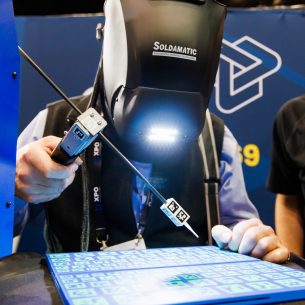
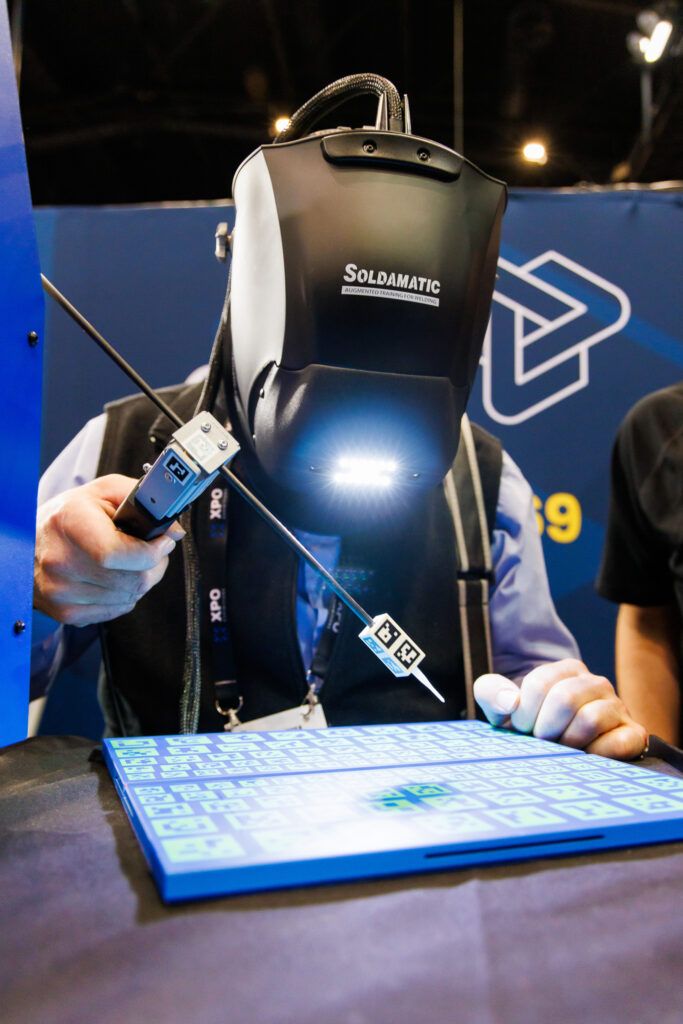
ATNZ are excited to introduce the latest welding simulation equipment to New Zealand as part of our commitment to future-focused training. The welding simulation equipment is highly realistic and authentically relevant to “real world” usage.
Now with robotics, the equipment can simulate all weld types, materials, consumables, and positions, and can be deployed to your premises with a trainer. This flexibility to simulate all positions and difficulty levels makes welding simulation an invaluable training tool for any business in the industry. This welding simulation training transitions perfectly into a Fabrication Engineering Apprenticeship or associated micro-credentials.
The Benefits of Simulated Training
Faster Learning Simulation technology allows immediate feedback on a learner’s performance. Trainers can instantly review simulation results and provide feedback on improvement areas, helping trainees learn far more quickly and efficiently.
Cost Savings Welding simulation technology reduces costs by decreasing the materials and equipment required for training. Virtual welding enables trainees to practice their skills efficiently and does not wear out equipment.
Repeatable Training Scenarios Trainers can easily create repeatable scenarios across various welding techniques and procedures. As a result, trainees can conveniently practice their skills and learn to respond to different welding challenges.
Safe Learning Environment Welding can be a hazardous process, especially for inexperienced welders. Welding simulation technology allows trainees to practice their skills in a safe and controlled environment without risk of injury or damage to equipment.
Flexibility The flexibility of welding simulation technology allows trainers to tailor training programmes to the needs of individual trainees. Creating different scenarios and adjusting to various difficulty levels will enable trainees to learn at their own pace and provide a more personalised training experience.
Needing something different? We can also work with you to develop something bespoke to suit your needs. Get in touch by completing the enquiry form below.