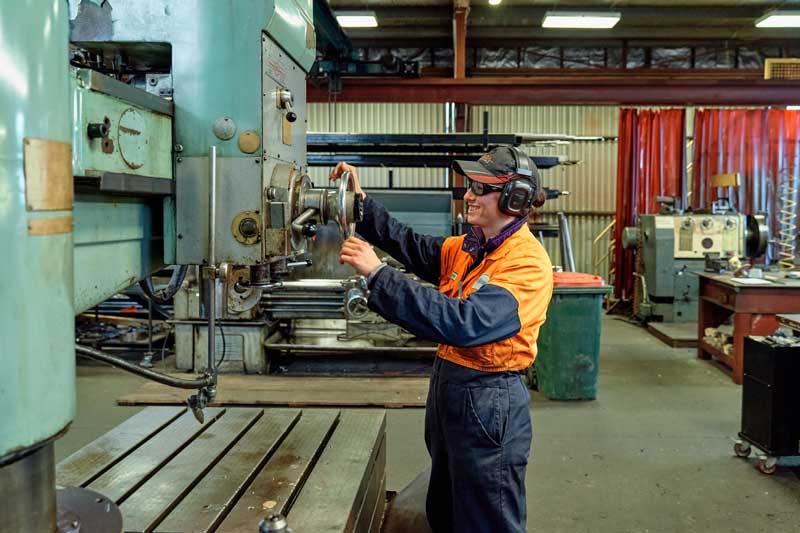
If you enjoy solving real-world problems, getting hands-on with tools, and want to earn a qualification while you work, an engineering apprenticeship is a smart, future-proof pathway. At its heart, an apprenticeship blends paid employment with nationally recognised training, so you build real competence on the job while completing the theory and assessments required for your trade credential.
How an ATNZ apprenticeship works to keep you moving
If you are hosted as an ATNZ apprentice, you’re employed by us and coached through every step of the journey to being placed with host companies across New Zealand to gain day-to-day experience on the tools. In practice, that means we’re your employer and we match you with a host where you’ll work and learn. Hosts pay only for the hours you’re working in their business; ATNZ covers time away for block courses, holidays, or sickness and pays qualification-related training costs. It takes the friction out for employers and keeps your learning moving.
We will provide structured support where you’ll have a dedicated Account Manager/Mentor, access to an e-learning portal, textbooks, study groups, and online tutorial support. Your Account Manager/Mentor will work with you on your training plan and define credit milestones at the start of the apprenticeship. ATNZ will link wages to those milestones so your pay reflects your growth as you gain exposure to more than one business operation and start building versatility, confidence, and a broader skill set.
In short: you earn, you learn, and you’re backed by people who want you to finish strong.
The Training Pathways You Can Choose
ATNZ delivers New Zealand Apprenticeships at Level 4 in areas like Mechanical Engineering (with strands such as Fitting and Machining, Machining, Maintenance Engineering, Toolmaking) and General Engineering. These programmes are designed with industry input and backed by NZQA approval. Not sure which fits you best? Think in terms of what you want to make, fix and maintain:
- Mechanical engineering – Mechanical engineering offers a great variety of work. You will build and fix machines, tools, and components and solve related problems. We will teach you exactly how to do this.
- Engineering Fabrication – Fabrication Engineers make, install and repair metal products such as vents, handrails, boilers, aircraft and boat parts, or beams and girders for construction projects. It is a great skill set to learn as it is easy to transfer between different industries, so there is always the opportunity for something new.
- Refrigeration & Air Conditioning – Refrigeration and Air Conditioning Engineers install, service and maintain refrigeration and air conditioning systems. Future job prospects are excellent.
- Mechanical Building Services – Mechanical Building Services Engineers install and maintain the components used in heating, ventilating, and air conditioning (HVAC) systems. This career path suits people who like a huge variety in their work.
- Welding Programmes – Welders are skilled tradespeople who fuse metal precisely, crafting various products, from manufacturing components to architectural structures. New Zealand has a shortage of welders, so job prospects are excellent.
These specialisations map closely to how the engineering trades are organised across the industry across both Australia and New Zealand.
What You’ll Actually Do Day to Day
Your work depends on the path you choose, but the pattern is consistent:
- On-the-job learning: You’ll work with tradespeople and supervisors, following safe work practices and do things as diverse as learning to read drawings, measuring and machining components, assembling and maintaining equipment, or fabricating and welding structures, real work that builds competence and confidence.
- Off-the-job learning: You’ll complete online learning, attend study groups, and (where required) block courses that consolidate theory and practical tasks, all coordinated with your workplace projects.
- Regular check-ins: Your ATNZ Account Manager/mentor will review your log of tasks, confirm competencies, and help plan the next credits to tackle.
- Wellbeing and safety: You’ll have dedicated health & safety and mental-health support built into the programme because showing up ready to learn starts with being safe and well.
What Success Looks Like
- Competency-based progress: You’ll collect credits toward your qualification and as you reach milestones, your pay and responsibilities typically increase.
- Regular mentoring: Use your structured visits and coaching to help you turn day-to-day tasks into recognised competencies and keep you on a realistic timeline to finish.
- Real projects that matter: Because you’re embedded with a host company, your work contributes to production, maintenance, quality, and customer delivery, not just classroom simulations.
- Breadth of experience: Where it benefits your learning, you may be exposed to different operations or even additional host environments to round out your skills.
What It Takes to Get Started
Great apprentices come from all sorts of backgrounds. ATNZ welcomes applications from age 16+ (no upper age limit) and supports learners from diverse communities who have NZ citizenship or residency. You’ll complete a placement interview to ensure a good fit with the company, and we’ll identify any literacy or numeracy support you might need early, then put help in place so you can fly.
From there, your first weeks will focus on safety, foundational skills, and orienting to the machines, materials, and processes you’ll use daily. You’ll set a training plan with your mentor, join study groups if you want extra momentum, and start earning credits from day one.
Ready to Build Your Future?
If you’re curious, practical, and keen to earn while you learn, an ATNZ engineering apprenticeship gives you the structure, support, and real-world experience to launch a career that lasts. Explore our current options in Mechanical Engineering and Engineering Fabrication, check out our Become an Apprentice information, or talk with us about which pathway suits your goals, we’ll help you turn potential into a profession.