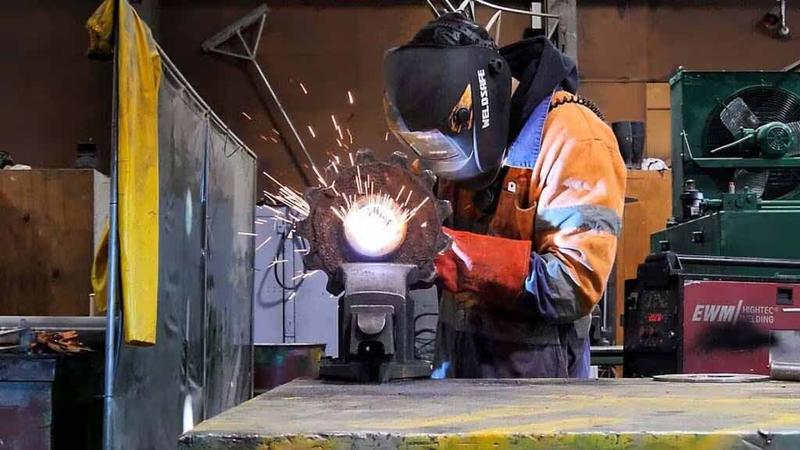
People often ask us if they should pursue light or heavy fabrication. Both trades fall under the umbrella of fabrication engineering, and both lead to a Level 4 qualification. The choice comes down to the materials you enjoy working with, the types of projects that interest you, and the environments you thrive in. This guide compares light fabrication with heavy fabrication so you can decide which pathway suits your goals.
What is Light Fabrication?
Light fabrication involves working with thin materials such as sheet metal, aluminium and stainless steel (typically less than 4mm thick). These materials are used in industries where strength is required but the weight needs to be kept low. Light fabrication engineers build products like:
- Architectural fittings such as handrails, balustrades, staircases and decorative panels.
- Marine and automotive components, including boat fittings, fuel tanks and vehicle bodywork.
- Process plant equipment like ductwork and hoppers.
Because the materials are light, the work requires precision and clean finishing. Welding must be neat and sometimes TIG welding is used to achieve fine seams. Light fabrication engineers often work in workshops and small factories, though some site work is required for installation.
What is Heavy Fabrication?
Heavy fabrication deals with thick plate steel (often 4mm or more) and large structural sections. Heavy fabricators make the big stuff that holds New Zealand together. Typical projects include:
- Structural steel beams, columns and trusses for buildings and bridges.
- Heavy‑duty equipment like transport frames, frames for mining machinery and industrial tanks.
- Infrastructure components such as road barriers, culverts and retaining structures.
The work is physically demanding and often carried out on construction sites, in shipyards or large workshops. Welding thicker materials usually involves arc welding processes, and handling the steel safely requires teamwork and the use of cranes and lifting gear.
Training Pathways
Although the day‑to‑day work differs, the training structure is the same. Both trades qualify you for the New Zealand Certificate in Engineering Fabrication (Trade) Level 4. You start by learning core skills in measuring, cutting, forming and welding, then specialise as your experience grows. The key differences in training are:
- Materials and thicknesses: Heavy fabrication focuses on thicker materials and heavy sections, while light fabrication teaches more delicate handling and finishing.
- Tools and equipment: Light fabrication uses smaller presses, folders and TIG welders; heavy fabrication uses larger rolling machines, presses, submerged arc welders and heavy lifting equipment.
- Work environments: Light fabrication apprentices spend more time in controlled workshops, whereas heavy fabrication apprentices split their time between the workshop and large work sites.
You can read more about the light fabrication apprenticeship and the heavy fabrication apprenticeship.
Skills & Tools used in Each Trade
Both fabrication trades share core competencies, but some skills are emphasised more in one than the other:
Materials
Light Fabrication: Stainless steel, aluminium, thin sheet steel
Heavy Fabrication: Thick plate steel, structural sections
Welding processes
Light Fabrication: MIG and TIG welding on thin material
Heavy Fabrication: Arc welding, MIG on heavy sections
Forming equipment
Light Fabrication: Press brakes, guillotines, hand formers
Heavy Fabrication: Plate rolls, heavy presses, hydraulic punches
Work environment
Light Fabrication: Workshops, small factories, marine yards
Heavy Fabrication: Construction sites, shipyards, large factories
Fit‑off and finishing
Light Fabrication: Precision fitting, polishing, clean finishes
Heavy Fabrication: Fabricating assemblies, fitting large sections
Your personality and preferences will help determine where you fit best. If you enjoy delicate work, clean finishes and creative architectural projects, light fabrication is likely a good match. If you prefer working on large structures, enjoy seeing massive projects come to life and don’t mind getting dirty, heavy fabrication may be ideal.
Who is suited to Light Fabrication?
Light fabrication attracts people who:
- Like working with stainless steel and lighter materials.
- Enjoy the precision of thin‑material welding and fine finishing.
- Prefer workshop environments with consistent conditions.
- Want to work on architectural, marine or bespoke fabrication projects.
Who is suited to heavy fabrication?
Heavy fabrication suits people who:
- Are happy working with thick steel and heavy equipment.
- Enjoy challenging physical work and problem‑solving on site.
- Like being part of large construction and infrastructure projects.
- Want to see big structures take shape and stand for decades.
Where Can These Trades Take You?
- Strong Industry Demand: Light and heavy fabrication skills are needed across New Zealand’s construction, manufacturing, marine, infrastructure, and industrial sectors, creating steady long-term career opportunities.
- Specialist Technical Pathways: Fabricators can continue developing on-the-tools expertise in areas such as structural steelwork, sheet metal, stainless fabrication, complex site installation, and other specialised fabrication work.
- Leadership Progression: With experience, many tradespeople move into leading hand, foreman, workshop supervision, or quality-focused roles, taking on greater responsibility across teams and projects.
- Broader Career Development: Fabrication experience can also lead into project coordination, estimating, or advanced training such as Mechanical Engineering (Advanced) Level 5 for those wanting to build higher-level technical or supervisory capability.
Making your Choice
Think about the work environments you enjoy, the types of projects that excite you and the skills you want to develop. Talking to people already in the trade or arranging a work experience placement can also help you decide.
For further reading, we recommend our news article Engineering Careers Beyond the Tools: Where Apprenticeships Can Take You Long‑Term, which looks at how tradespeople progress from the workshop into supervisory and technical roles.
Book a call with us now! We’ll help match you with a host company, support you through the training process and ensure you gain the skills needed to build a successful career in fabrication engineering.