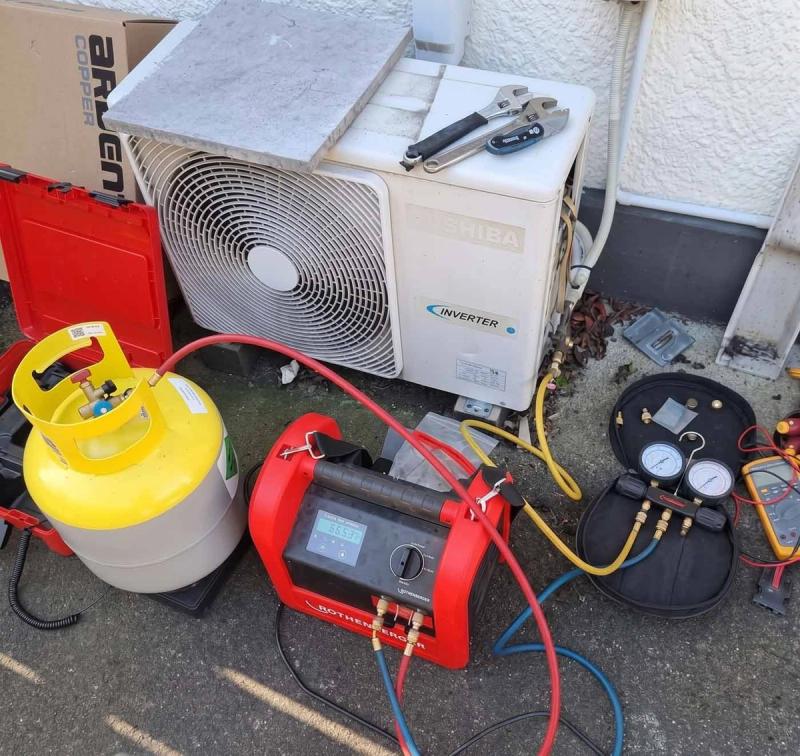
Under the Health and Safety at Work (Hazardous Substances) Regulations 2017, anyone filling gas cylinders, refrigerants included, needs to hold Approved Filler certification issued by a WorkSafe-authorised compliance certifier. For refrigeration and HVAC&R businesses this is easy to overlook, mostly because filling cylinders is such a routine part of the job that nobody questions it until an audit, an incident, or a client asking for evidence of certification forces the issue.
What Approved Filler Certification Covers
Approved Filler certification authorises a technician to fill refrigerant cylinders and containers safely and within the law. It covers filling the cylinder itself, not charging refrigerant into a system, which is a separate skill covered under wider refrigeration and air conditioning training. For refrigeration businesses, that means being certified to fill refrigerant cylinders as part of everyday servicing and installation work, rather than working around the requirement or outsourcing every fill to someone else.
Training and assessment are built around legal responsibilities for approved fillers, compressed gas and refrigerant hazards, cylinder identification, safe filling procedures, inspection and pre-fill checks, pressure and capacity limits, emergency response, and record keeping. It is compliance-focused training and assessment leading to an Approved Filler Compliance Certificate, rather than a general refrigeration skills course or an NZQA qualification, and it sits alongside the practical trade knowledge a technician already has.
Why This Matters For Refrigeration And HVAC&R Businesses
For an employer, this is less about ticking a training box and more about who on your team can legally fill refrigerant cylinders as part of the job. If only one technician holds a current Approved Filler Compliance Certificate, every cylinder that needs filling depends on their availability. A technician goes on leave, moves to a different site, or leaves the business, and suddenly a job that should take twenty minutes is waiting on someone else to become free.
Spreading certification across more of your team removes that bottleneck. It also matters for compliance reporting, since businesses working with hazardous substances are expected to demonstrate that the people doing the work are properly authorised to do it, rather than simply competent in a general sense. Not being able to produce that evidence quickly during an audit or a client review is a real compliance and operational risk, worth planning for ahead of time rather than after the request comes in.
What The ATNZ Course Involves
Approved Filler certification is delivered online, with practical assessment, workplace evidence or additional documentation required depending on the pathway a learner takes. The Approved Filler (Refrigerant) course in the ATNZ Store is built specifically for refrigerant filling within refrigeration and HVAC&R environments, rather than covering the full range of industrial gases a general compliance certifier might handle.
That focus matters. A certificate issued for refrigerant filling is specific to that scope, so a technician trained through this course is certified for the work they are doing on site, not a broader category of gas handling they will never touch.
Initial Certification Versus The Refresher
Approved Filler certification is not a one-off. WorkSafe requires Approved Filler Compliance Certificates to be renewed at least every five years, which is why a refresher option exists alongside the initial course. The refresher is built for technicians who already hold certification and need to demonstrate that their knowledge and practical skills are still current, rather than starting the full course again from scratch.
Building refresher training into your workforce planning avoids the situation where a technician's certification lapses without anyone noticing, which is a more common problem than most businesses expect given how routine the underlying task feels. It is worth keeping a simple record of who holds current certification and when each person is due for renewal, rather than relying on memory across a growing team.
What The Certificate Does Not Cover
Approved Filler certification is specific to filling gas cylinders safely and legally. It does not authorise plant-specific operating procedures, and it is not a substitute for the wider refrigeration and air conditioning skills a technician needs to install, commission or fault-find on a system. Businesses wanting broader technical development for their team, rather than this specific compliance requirement, are better served by standards or programmes on the Refrigeration and Air Conditioning pathway.
It is also worth being clear internally about scope. Holding Approved Filler certification for refrigerant work does not extend to other classes of gas without separate certification for that scope, so businesses working across multiple gas types need to check what each technician is certified for.
Certifying Your Team As Approved Fillers
Approved Filler certification is one of those requirements that sits quietly in the background of refrigeration work until it becomes a problem, either through an audit, a client request, or a job held up because the only certified technician is unavailable. Getting ahead of it is straightforward, and spreading certification across your team removes a genuine operational risk.
If you want to certify technicians as approved fillers, or you are planning wider workforce training alongside it, our commercial skills training team can talk you through what fits your business.