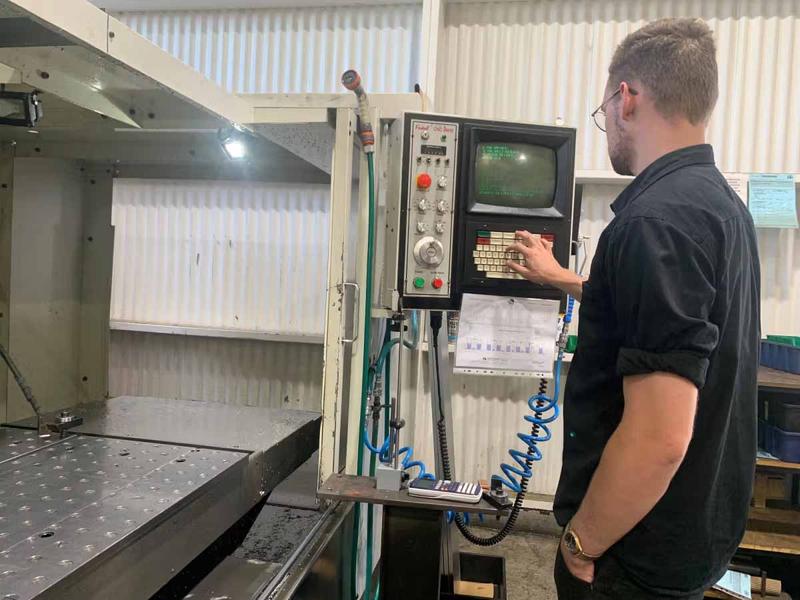
The right CNC training option depends on the learner’s existing skills and the result the workplace needs. One employee may require assessment in a single technical area. Another may need several related skills developed together. Someone moving into CNC work may benefit from a recognised package covering the core responsibilities of an operator.
We offer several ways to approach CNC training in New Zealand, including individual NZQA standards through the ATNZ Store and the Mechanical Engineering CNC Operator (Micro-Credential) Level 3.
Start With The Workplace Requirement
Your workplace requirements might be to:
- set up and operate CNC machinery safely
- improve measurement and quality-control practices
- carry out routine preventive maintenance
- develop skills for a new CNC operator role
- learn to programme a particular type of machine
- prepare for further mechanical engineering training
This distinction matters. A learner who already operates CNC machinery may only need one skill assessed. Someone entering the role may need structured learning across machine operation, safety, maintenance and quality assurance.
The workplace must also be able to support the training. Many CNC standards involve practical, on-job activity, so learners may need access to suitable machinery, relevant production tasks and employer support.
Option One: Individual CNC Standards
Individual standards provide the most focused approach. They suit learners and employers by addressing one defined skill area rather than a complete CNC operator role.
The CNC NZQA standards available through the ATNZ Store cover skills such as CNC setup and operation, programming, quality control, preventive maintenance and safe engineering practices. The collection also includes standards relating to CNC lathes, milling machines and different machining processes.
An individual standard may suit:
- an experienced operator ready to demonstrate a particular skill
- an employee learning to use a different CNC machine
- a business addressing a quality, safety or maintenance gap
- a learner adding one recognised standard to a wider development plan
The delivery format depends on the product selected.
Assessment-only training is intended for people who already hold the relevant knowledge and practical skills. They must be able to demonstrate their capability against the requirements of the standard and provide any required workplace evidence.
Tutor-supported training includes structured learning, tutor guidance and assessment. This format may be suitable when the learner needs teaching and support before they are ready to demonstrate the required outcomes.
Each store listing should be reviewed for prerequisites, NZQA credits, delivery format and practical assessment requirements.
Option Two: Bundled Learning
Bundled learning brings related standards together in a structured bundle. It may suit a learner who needs development across several connected areas but does not require training across an entire trade.
For example, a business preparing someone for CNC work may identify a need for:
- engineering health and safety
- machine setup and operation
- quality assurance
- routine equipment maintenance
Completing these areas together gives the learner a clearer sequence and allows the employer to plan workplace tasks around the course requirements.
Bundles can also make enrolment simpler. Instead of identifying and purchasing every standard separately, the employer can select a course designed around a defined set of learning outcomes.
The content still needs to match the role. Before enrolling, employers should check that the standards included are relevant to the machines, processes and responsibilities available in their workplace.
Option Three: The CNC Operator (Micro-Credential) Level 3
The Mechanical Engineering CNC Operator (Micro-Credential) Level 3 is an NZQA-approved, 40-credit package for people developing practical CNC operator skills in engineering and manufacturing workplaces.
It combines four Level 3 skill standards covering:
- health and safety practices in an engineering environment
- quality assurance and control
- preventive maintenance on plant or equipment
- setting up and operating CNC machinery
This creates a defined training outcome. Learners develop the skills required to operate CNC equipment while also understanding the safety, maintenance and quality processes that support consistent production.
The micro-credential is workplace-based and combines on-job activity with online or self-directed learning. Learners can start at any time and complete the training New Zealand-wide. They must be employed in an engineering or manufacturing workplace, with employer agreement for the workplace learning.
It may suit new CNC operators, people entering manufacturing or employees moving from another workshop role into CNC machining.
The four standards can also be completed individually. This means an employer can choose the complete micro-credential or select the standard that addresses a narrower skills gap.
Comparing The CNC Training Options
The learner’s starting point should guide the decision.
Choose an individual standard when one clearly defined skill needs to be taught or assessed.
Consider bundled learning when several connected skills are required and a structured course provides a useful sequence.
Choose the Level 3 micro-credential when the goal is to build a recognised foundation across the principal responsibilities of a CNC operator.
These options have different purposes. The micro-credential is broader than one standard, but it remains focused on CNC operator skills. It does not cover the complete technical scope of a mechanical engineering trade qualification.
When A Full Apprenticeship May Be More Suitable
Some learners need development beyond CNC operation. They may want to build skills in manual machining, component manufacture, fitting, assembly, engineering drawings and machinery maintenance.
The CNC machining training pathway explains how operator skills connect with wider precision engineering and manufacturing careers.
For someone seeking broad trade development and a Level 4 qualification, the Fitting and Machining Apprenticeship may be the more appropriate pathway. It covers manual and CNC machining alongside the wider skills required of a qualified fitting and machining tradesperson.
Individual standards and the micro-credential can support progression into further training, but they do not replace the scope of an apprenticeship.
Choosing CNC Training For Your Team
Ask three questions before enrolling:
- What must the learner be able to do in the workplace?
- Which of those skills can they already demonstrate?
- Does the need involve one standard, several connected skills or the complete CNC operator micro-credential?
Then confirm that the workplace can provide the machinery, practical tasks and evidence required.
Browse the current CNC standards through the ATNZ Store or speak with our team about the training option that best matches the learner’s role and your workforce needs.