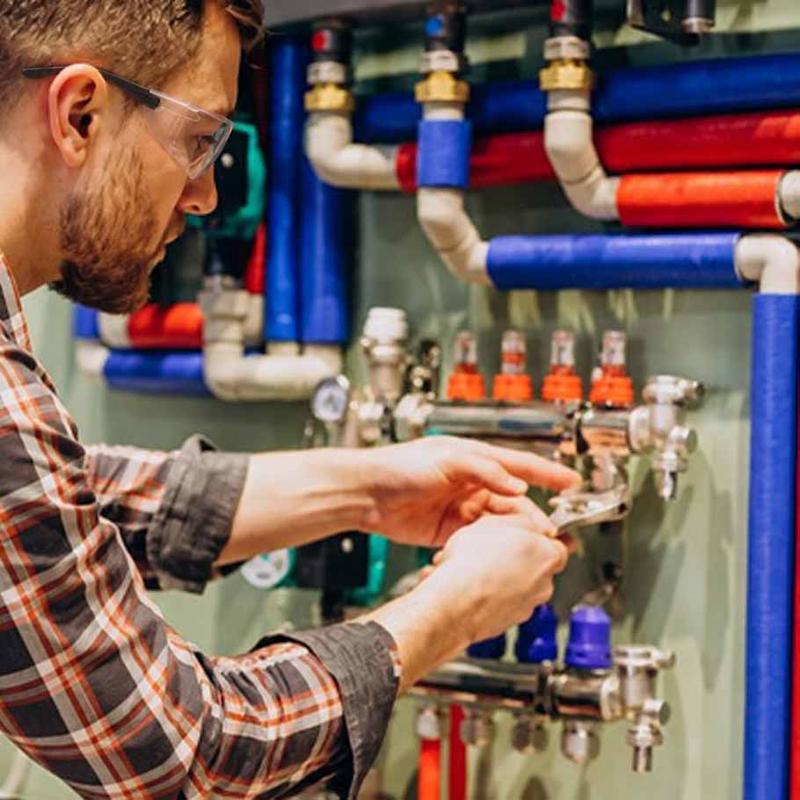
Most workshops have one or two people who understand the hydraulic and pneumatic systems running through their machinery, and everyone else leans on them when something stops working. That arrangement holds up fine until one of them moves on, goes on leave, or retires, and the business is left without anyone who can read a circuit diagram or work out why an actuator has failed.
Fluid power sits underneath a lot of the equipment New Zealand businesses rely on every day: hydraulic presses, pneumatic clamping systems, lifting gear, mobile plant, packaging lines. It covers machinery and heavy equipment used across construction, manufacturing, transport and industrial settings. Until recently, there was no formal training available for fluid power skills in New Zealand, so most of this knowledge has been picked up on the job rather than taught properly. That gap becomes a real problem the moment equipment changes or a key person leaves.
Where Fluid Power Skills Sit In A Maintenance Team
Fluid power knowledge tends to be concentrated in one or two people rather than spread across a team. That works fine when nothing changes, but few workshops stay static for long. New machinery can introduce hydraulic or pneumatic components that need different handling to what the team already knows. A trusted technician shifts into a different role. A business takes on work that needs the wider team to maintain and fault-find fluid power systems confidently, rather than simply operate them.
A common scenario looks like this: a maintenance fitter has spent years quietly becoming the go-to person for anything hydraulic on site, purely through hands-on exposure. They can diagnose most faults, but they have never formally learned to read a circuit diagram or worked through the safety principles behind the systems they service. Formal training turns that informal expertise into something documented and transferable, and gives a wider group of staff a proper, structured understanding of how these systems work, instead of leaving the whole team dependent on whoever happens to know.
What The Fluid Power Engineering Fundamentals Programme Covers
The New Zealand Certificate in Fluid Power Engineering Fundamentals (Level 3) builds the foundational knowledge maintenance staff need. NZQA describes graduates as having the fundamental knowledge, understanding and practical skills to perform a defined range of fundamental fluid power tasks under limited supervision.
It covers hydraulic and pneumatic components and symbols, how to read basic circuit diagrams, and troubleshooting techniques for common faults. Safety content is built around health and safety, workplace policies and procedures, risk assessment, safety culture and fluid power hazards specifically. Learners also develop trade calculation skills, the selection, use and maintenance of hand and portable power tools, and basic maintenance of fluid power systems, including removing and replacing parts.
Training is workplace-based, so learners apply technical knowledge directly to the systems they already work with, rather than learning it apart from the job.
Who This Training Suits
Level 3 fluid power training suits people working as fluid power technicians under supervision, including maintenance staff who regularly encounter hydraulic or pneumatic systems but have never had formal training in how they work. It is a standalone qualification rather than an apprenticeship, so it gives a technician solid grounding without requiring a multi-year commitment.
That makes it a practical option for an employer who already has someone showing aptitude around hydraulics and pneumatics and wants to formalise that knowledge, without moving that person into a full trade apprenticeship in a different discipline. It also suits people who are already trade qualified, such as those who have completed an apprenticeship in a related discipline but need specialised fluid power knowledge they never formally covered. Because no formal fluid power training existed in New Zealand until recently, some of these enrolments come from experienced people wanting a skill they already use on the job properly recognised. It also suits a business bringing on new equipment and wanting existing staff trained properly on the systems involved, rather than learning by trial and error.
Where It Leads From There
Fluid power fundamentals sits well alongside broader mechanical engineering development. Many businesses use it as a stepping stone toward the Mechanical Engineering pathway at Level 4, where fluid power knowledge becomes one part of a much wider set of fitting, machining and maintenance skills.
That progression matters for workforce planning. A maintenance technician who completes Level 3 fluid power training and later moves into a full mechanical engineering apprenticeship starts that apprenticeship with a real head start, rather than beginning cold.
When A Full Apprenticeship Is The Better Fit
Level 3 fluid power training is the right call when the need is specific: a maintenance team working around hydraulic and pneumatic equipment that needs the knowledge to keep it running safely. It was never designed to produce a fully qualified tradesperson across the mechanical engineering trade.
If the requirement is broader than that, someone who needs to develop across fitting, machining, maintenance and fault-finding as a complete trade qualification, an engineering apprenticeship is the better starting point. Both options serve genuinely different needs, and the right choice depends on how wide the requirement is rather than which sounds more impressive on paper.
Training Your Maintenance Team In Fluid Power
Formal fluid power training gives your team a genuine, recognised qualification to work from, and spreads the ability to maintain and fault-find these systems more widely, rather than resting on one person. That is a meaningful gain in a part of the trade that has had little structured training available until now.
If you are weighing up whether focused Level 3 Fluid Power training or broader trade training is the right fit for your workforce, get in touch with our team and we will help you work out which one matches the need.