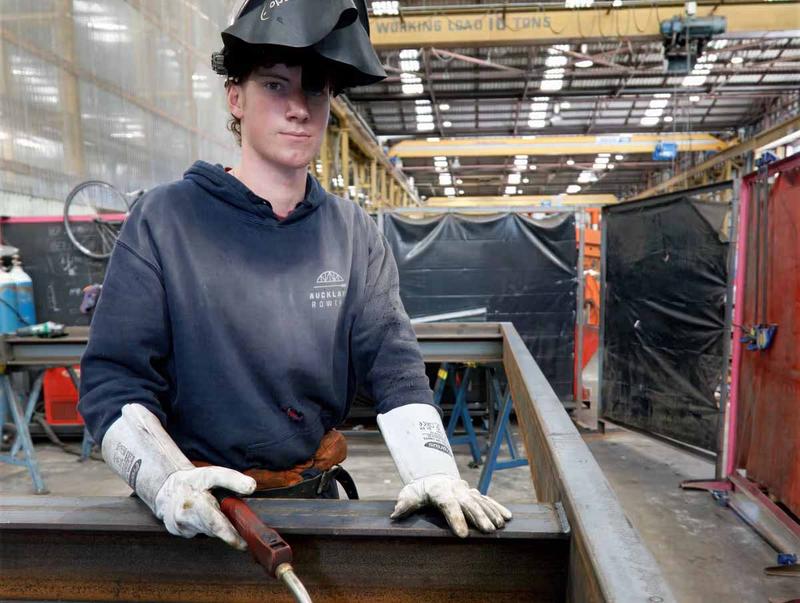
South Auckland engineering and fabrication employers currently have an opportunity to bring motivated, MSD-supported welding learners into their workforce at the right stage of development. These learners are already building practical welding capability, have achieved NZQA welding unit standards, and are preparing to move into welding-related roles while continuing toward the New Zealand Certificate in Welding (Level 3). For employers looking to strengthen entry-level capability without starting from zero, this creates a more immediate and commercially relevant hiring opportunity.
That matters because finding good entry-level welding people is not easy. The challenge is rarely just about filling a position. It is about finding someone who can step into a workshop, follow instructions, work safely, build confidence quickly, and grow into a reliable team member over time. In South Auckland, where many businesses are balancing rising demand, succession planning, and the need to build future capability, this current learner group deserves direct attention.
What These South Auckland Welding Learners Already Bring
One of the biggest mistakes employers can make with entry-level hiring is assuming all early-stage candidates are starting from the same point. These South Auckland learners are not arriving without preparation. They already have practical welding training underway and have achieved NZQA welding unit standards, giving them a stronger foundation than a candidate with no exposure to workshop expectations or structured learning.
They are also continuing toward the New Zealand Certificate in Welding (Level 3), which helps build safe work practices, welding fundamentals, basic fabrication skills, and the ability to carry out a defined range of tasks under limited supervision. That gives employers access to people who are still developing, but who are already moving in the right direction with recognised structure behind them.
This is why our South Auckland welding talent initiative matters. It is built around helping employers connect with local learners who already have practical capability underway and are ready to take the next step in welding-related employment.
Why This Is A Different Hiring Opportunity
For many businesses, the default hiring strategy is to wait for someone with stronger experience to become available. Sometimes that works. Sometimes it means carrying an open gap for too long, placing pressure on senior staff, and competing with other employers for the same small group of experienced people.
This South Auckland learner group offers something different. These candidates are local, motivated, and already engaged in a supported pathway into the trade. They are not being presented as fully qualified welders. They are being presented as entry-level talent with meaningful groundwork already done.
That changes the hiring conversation. Instead of asking whether someone can work completely independently from day one, the better question becomes whether they have the right base to develop well inside your workshop. That is often a far better commercial question when the goal is to build long-term workforce capability rather than make a short-term hire and hope it works out.
Depending on individual circumstances, support may also be available through MSD. That creates another reason for employers to look seriously at this group now rather than treat them as a generic future possibility.
What “Job-Ready” Should Mean For This Group
For these learners, “job-ready” should not mean fully trade-qualified or fully independent. It should mean they are ready to enter a real workplace with the practical base, attitude, and support structure needed to keep progressing.
When employers assess this group, the strongest indicators include:
- confidence using tools and workshop equipment appropriately
- safe work habits and awareness of hazards
- willingness to listen, ask questions, and respond to feedback
- basic familiarity with welding processes and materials
- reliability, consistency, and readiness to turn up well
- genuine interest in building a welding career
What Employers Should Assess In Interviews And Trials
The goal with this learner group is not to test whether someone already knows everything. The goal is to identify who is most ready to succeed in your environment and who is likely to make the strongest use of the training and support around them.
In interviews and trial situations, employers should look closely at:
- how the person talks about safety
- whether they can follow instruction accurately
- how they respond when corrected
- whether they show care around quality and process
- whether they can explain why they want to work in welding
- whether they show consistency, patience, and willingness to improve
Why Structured Training Still Matters
This learner group is strongest when the workplace and the training pathway support each other. That is why recognised training matters. The New Zealand Certificate in Welding (Level 3) gives learners a practical starting point in welding, helping build safer habits, clearer technical foundations, and a more consistent approach to skill development.
For employers, that creates useful structure around growth. Instead of relying only on informal coaching in the workshop, there is a clearer framework for what the learner is building and what the next stage of development looks like. That helps with consistency, expectations, and future planning.
Welding at this stage can grow into wider fabrication or engineering-related capability over time, which is part of what makes early-stage hiring worth taking seriously.
How Hiring These Learners Can Support Long-Term Workforce Capability
One of the strengths of bringing in the right entry-level people is that the benefit rarely stops at the first role. A learner who starts in welding may later grow into broader fabrication work, site-based trade activity, or related technical pathways depending on the business and the opportunities around them.
That longer-term view matters for employers because succession planning is rarely about one narrow task forever. It is about bringing in people who can grow with the business. In some environments that progression may stay within welding and fabrication. In others, it may eventually connect to broader trades and systems work such as Mechanical Building Services, where structured technical development supports long-term capability in heating, cooling, ventilation, and water services.
Why South Auckland Employers Should Act Now
This article needs to matter specifically to South Auckland employers because the learners at the centre of it are here now. If the goal is to place motivated MSD-supported welding learners into businesses where they can continue building capability, then the opportunity is immediate, not theoretical.
Waiting for a perfect experienced hire may still feel safer on paper. But when a current local cohort already has practical training underway, recognised unit standards behind them, and a pathway into continued development, there is a strong case for acting earlier. Employers who engage now may be able to strengthen local workforce capability, reduce some hiring pressure, and take part in a more supported pathway into entry-level recruitment.
Your Next Step As An Employer
If you are a South Auckland engineering or fabrication employer looking to bring new welding talent into your business, now is a good time to look closely at this learner group. They already have practical training underway, recognised unit standards behind them, and a clear pathway into further workplace development.
Our South Auckland welding talent initiative is there to help employers connect with these learners directly. If you are looking for entry-level welding people who are already moving in the right direction, and want to explore whether support may be available through MSD depending on individual circumstances, talk to us about the current cohort and whether they could be the right fit for your workshop.