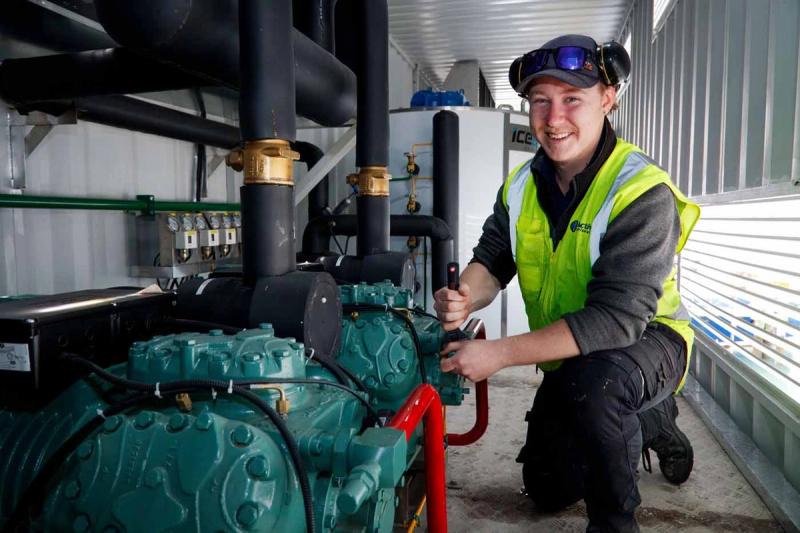
For many employers, the training question is not whether development matters. It is which kind of training makes sense for the need in front of you. Sometimes the right answer is short, targeted skills training for engineering, HVAC and refrigeration businesses. That may include compliance training, refrigerant handling, HVAC controls, commissioning capability, equipment-specific technical training or targeted upskilling around new systems and technologies. In other situations, the better fit is a structured NZQA-recognised training pathway that builds capability over a longer period and leads to a formal qualification.
One business may need a quick compliance response for a small group of staff. Another may need to build deeper technical capability across a team. Another may be planning for succession and looking at how to move experienced tradespeople into more senior technical or supervisory roles. This is becoming increasingly important across engineering and HVAC&R industries facing ongoing skills shortages, evolving technologies and an ageing trades workforce. The strongest workforce strategies usually combine both approaches, using shorter skills training where speed and specificity matter, and formal programmes where long-term capability needs to be built properly.
What Skills Training Is Designed To Do
Skills training is best understood as targeted workforce development. ATNZ includes single unit and skill standards, bundled skill pathways, approved filler certification, customised contracted training, and on-site or online delivery options depending on the requirement. That makes it well suited to businesses that need training tied to a clear operational outcome rather than a full qualification journey in HVAC&R and engineering environments, which may involve targeted capabilities in refrigerant safety, HVAC system commissioning, controls, fault-finding, ventilation systems, or specialised equipment.
In practical terms, skills training is usually the right fit when you need to:
- close a specific compliance gap
- credential existing staff against a standard
- address a narrow capability issue
- support a new process, piece of equipment or regulatory requirement
- upskill experienced tradespeople in a specialised technical area
- train a group with minimal disruption to operations
This is why the workforce training and compliance certification matters. It gives employers access to assessment-only or facilitated learning options, structured bundles, approved filler certification where required, and customised training that can be delivered on-site, online or in a blended format.
What Formal Programmes Are Designed To Do
Formal programmes serve a different purpose. They build recognised technical capability over time and create clearer progression across a workforce. For employers, that can support stronger technical consistency, succession planning, supervisory capability and reduced reliance on recruiting experienced tradespeople from an already competitive market. That includes Level 3 and 4 specialist programmes, Level 4 apprenticeships, and the Mechanical Engineering (Advanced) Level 5 pathway. These are not quick interventions. They are structured pathways that formalise skills, strengthen consistency, and support long-term workforce development.
For employers, formal programmes are usually the better fit when you need to:
- develop qualified tradespeople internally
- build depth in specialist technical disciplines
- support leadership and supervisory progression
- create clearer capability pathways across a team
- reduce long-term reliance on recruiting already-experienced staff from the market
In other NZQA training, we focus on Level 3 and 4 qualifications, shorter specialist training and advanced Level 5 pathways, all framed around recognised expertise and workforce capability.
Our broader engineering training overview reinforces that progression model, showing how specialist training, apprenticeships, advanced training and skill training all sit in relation to one another.
When Skills Training Is The Better Option
The biggest mistake employers make is assuming every training need should be solved with a formal programme. In reality, skills training is often the better commercial decision when the requirement is immediate, narrow and operational. That does not make it lower-value training. In many engineering and HVAC&R environments, targeted specialist training is critical for maintaining technical capability, adapting to new technologies and supporting experienced tradespeople working in highly specialised roles.
A good example is compliance-led or role-specific training. If your business needs selected staff assessed against a standard, or needs training delivered quickly around a known operational requirement, shorter skills training can move faster and place less pressure on workflow. We specifically highlight individual unit standards, bundled skill pathways, approved filler certification, refrigerant handling and safety training, HVAC commissioning capability, and structured workshops such as ammonia safety training for refrigeration environments. That is exactly the sort of scenario where a formal qualification may be unnecessary, while a targeted training response is highly valuable.
When A Formal Programme Is The Better Option
Formal programmes become the better choice when the issue is not just a gap, but a capability pathway. If you want to grow qualified people, create depth across a function, or build succession into senior technical and supervisory roles, short training on its own may not always provide the broader long-term capability development some businesses require.
That is where programmes such as Level 3 and 4 specialist training, Level 4 apprenticeships, and Mechanical Engineering (Advanced) Level 5 come into their own. These pathways build job-ready trade capability, formalising skills, and strengthening senior technical and supervisory capability across engineering teams and complex operational environments.
For many employers, the decision comes down to timeframe. If the goal is to solve a current issue quickly, skills training is often right. If the goal is to strengthen the workforce over the next several years, a formal programme is usually the stronger option.
Why Employers Often Need Both
In practice, the strongest workforce plans do not choose one or the other forever. They use both. A business may use skills training to address a current compliance or operational requirement, while also using specialist NZQA training or apprenticeships to build future capability. That combined approach fits the way real businesses operate. One training stream solves today’s problem. Another builds tomorrow’s workforce. Together, they help businesses balance immediate operational performance with long-term workforce capability.
A useful companion read here is What Is Involved In an Engineering Apprenticeship?, because it helps clarify where structured apprenticeship pathways sit within wider workforce planning.
Choosing The Right Training Response
For employers, the practical test is simple. Ask what the business is actually trying to solve.
If the issue is a specific skill, standard, compliance requirement or short-term capability gap, skills training is often the better answer. If the issue is broader workforce development, succession, formal recognition or the need to grow deeper technical capability, a formal programme is usually the stronger fit.
That is why the best starting point is often a conversation.
Your Next Step As An Employer
The right choice depends on what your business needs now and what it needs next. If you are trying to address a defined operational, compliance or technical capability issue, start with skills training for engineering, HVAC and refrigeration businesses. If you are looking at deeper technical development, leadership progression or recognised qualifications, review the other NZQA training options and the wider engineering training pathways available through ATNZ.