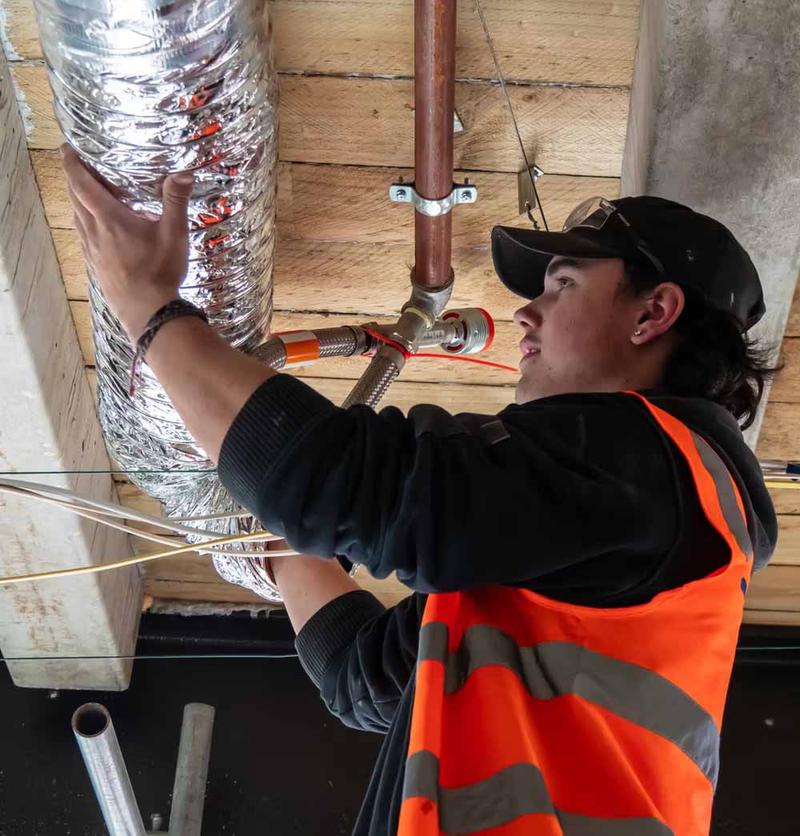
Refrigeration and air-conditioning trades underpin much of modern life. As the demand for climate control grows, so does the need for skilled people who can install, maintain and troubleshoot HVAC&R systems. In this blog, we look at where this career can take you in Aotearoa New Zealand, the pathways into the trade and the long-term opportunities available. As the industry shifts toward low-emissions systems and natural refrigerants, the demand for skilled HVAC&R technicians continues to grow across New Zealand.
What Do Refrigeration and Air-Conditioning Technicians Actually Do?
A refrigeration and air-conditioning (HVAC&R) role is hands-on and varied. Apprentices and technicians learn to install and service refrigeration systems, working on cool rooms, freezers and industrial chillers used in supermarkets, food processing plants and cold storage facilities. They maintain and repair HVAC systems for offices, schools and hospitals, ensuring comfort and healthy air quality. They test, commission and fault-find systems, checking pressures, controls and ensuring equipment runs efficiently and safely. A big part of the role is fault finding, diagnosing why systems aren’t performing as expected and getting them back up and running quickly.
The technical skills are wide-ranging. During an apprenticeship you learn how mechanical, electrical and refrigerant systems work together and how to diagnose and fix faults across these disciplines. You get to practice installation, commissioning, servicing and repair, pipework and brazing, safe handling of refrigerants, control systems and performance testing, and even learn to read and interpret technical drawings. You’ll also work with specialised tools such as gauges, recovery units and digital diagnostic equipment, building practical skills that are in demand across the industry.
It’s a career that values curiosity and problem-solving, and there’s always something new to learn.
Where You’ll Work: Industries and Environments
HVAC&R technicians are found wherever temperature control matters. Many apprentices begin their careers working for companies that operate supermarkets, food processing plants, breweries, wineries and cold storage facilities, keeping food and products safe. Others install and service air-conditioning and climate control systems in commercial buildings like offices, hospitals, schools and data centres. This work ensures comfortable and healthy environments for staff and customers.
Some technicians specialise further. You might work in transport refrigeration, maintaining refrigeration units on trucks and shipping containers that form part of Aotearoa’s cold chain. Marine systems and industrial cooling offer another path, supporting vessels and large-scale industrial processes where temperature control is critical. The work can take you from plant rooms and rooftops through to large industrial sites, and often involves working in different environments and conditions.
Understanding Commercial, Industrial, Transport and Comfort-Cooling Work
- Commercial HVAC&R (including comfort cooling): Servicing and installing systems in offices, retail stores, schools, hospitals and data centres. This includes everything from large central plant systems through to split systems, heat pumps and VRF systems used for comfort cooling.
- Industrial refrigeration: Maintaining and building large-scale systems in food processing plants, breweries and cold storage facilities. This work involves heavy machinery, industrial chillers and ammonia or CO₂ refrigerants, and requires strong technical skills and adherence to stringent safety standards.
- Transport refrigeration: Working on refrigeration units for trucks, trailers and shipping containers. These technicians ensure that perishable goods remain at the right temperature throughout transit.
- Comfort-cooling and building services: Installing and commissioning split systems, Variable Refrigerant Flow (VRF) units and packaged air-conditioning equipment in homes and small workplaces. This area often suits those who enjoy customer interaction and offers a focused pathway through programmes like the New Zealand Certificate in Air Conditioning Installation (Level 4), which focuses on installing, testing and maintaining split and VRF systems.
Each sector demands different combinations of mechanical, electrical and refrigerant skills, giving you flexibility to carve a niche based on your interests.
Why This Trade Is Technically Varied and in Demand
Across Aotearoa, employers need qualified technicians who can keep refrigeration and cooling systems running. The Refrigeration and Air-Conditioning pathway highlights this demand: HVAC&R technicians are in strong demand nationwide, offering steady work and long-term career security. The work matters because it protects food, medicines and indoor comfort, keeping businesses and communities operating safely.
The Level 4 apprenticeship teaches environmental and safety standards, safe handling of refrigerants, including natural refrigerants, and compliance practices. These skills make you valuable to employers aiming to reduce emissions and meet compliance obligations. Technicians must also meet strict safety and compliance requirements, including the safe handling of refrigerants and working with pressurised systems.
How Apprenticeships Build Specialist and Advanced Skills
Starting With an Apprenticeship (Level 4)
The typical entry point is the Refrigeration and Air Conditioning Apprenticeship. This programme lets you earn while you learn in a full-time role, building real skills while working toward your qualification. Training combines hands-on experience with online learning and block courses, and an account manager supports you throughout. The study type is workplace-based with online/self-study, so you can start anytime and train anywhere in New Zealand.
To enrol, you need to be a New Zealand citizen or permanent resident, at least 16 years old, and employed in a relevant role; NCEA Level 2 is recommended but not essential. Once signed up, you’ll learn environmental and safety standards, installation, commissioning, servicing and repair, diagnosing electrical, refrigerant and mechanical faults, safe handling of refrigerants, pipework and brazing, control systems and performance testing, and reading refrigeration drawings.
Specialising Through Air-Conditioning Installation (Level 4)
For those who enjoy hands-on installation and customer work, the New Zealand Certificate in Air Conditioning Installation (Level 4) focuses on installing and commissioning cooling systems such as split systems, VRF units and packaged units up to 50 kW. It takes around two years and covers assessing site requirements, fabricating ductwork and pipework, commissioning and testing systems, and maintaining air-conditioning equipment. This pathway leads to roles like air-conditioning installer or HVAC technician and offers a complementary pathway for those focused on installation and commissioning work.
Progressing to Advanced Technical and Supervisory Roles (Level 5)
Once qualified, many technicians choose to deepen their skills or move into supervisory roles. The Mechanical Engineering (Advanced) Level 5 programme develops higher-level technical expertise and leadership capability, preparing tradespeople to supervise teams, coordinate projects or specialise in complex systems. It’s open to qualified tradespeople from mechanical engineering, fabrication, refrigeration and air-conditioning backgrounds, making it a natural progression for ambitious HVAC&R technicians. The programme is workplace-based with online learning and applies theory to real projects. This is particularly valuable in industries such as industrial refrigeration and large-scale HVAC systems, where advanced technical knowledge and leadership capability are in high demand.
Career Outcomes and Progression Pathways
Graduates of the Level 4 apprenticeship have a wide range of career options. You can become a Refrigeration & Air-Conditioning Technician, HVAC Technician, Commercial/Industrial Refrigeration Engineer, Heat Pump Installer or Transport Refrigeration Technician.
After gaining experience, some technicians may transition into project coordination, estimating or sales roles, while others focus on specialist technical areas such as controls, natural refrigerant systems or energy optimisation. Many progress into supervision or operations management, using the leadership and technical skills gained through the Mechanical Engineering (Advanced) Level 5 programme to manage teams and projects. The sector’s growth means there are opportunities to work across Aotearoa, and experienced tradespeople often set up their own businesses.
What the Job is Really Like
HVAC&R is a hands-on trade that often involves working on live systems in real environments. You might be on a rooftop one day and inside a plant room the next. Some roles include on-call work and responding to breakdowns, where problem-solving under pressure is key. It’s a career that suits people who enjoy practical work, variety and responsibility.
Your Next Step in HVAC&R
By starting with a Level 4 apprenticeship or air-conditioning installation programme, you’ll gain a foundation in mechanical, electrical and refrigerant systems while earning a wage. From there you can specialise in commercial, industrial, transport or comfort-cooling sectors and even move into advanced technical or supervisory roles through Level 5 training. If you’re ready to start a rewarding career that keeps Aotearoa’s businesses and communities running smoothly, explore our HVAC&R pathways and see where the journey can take you.