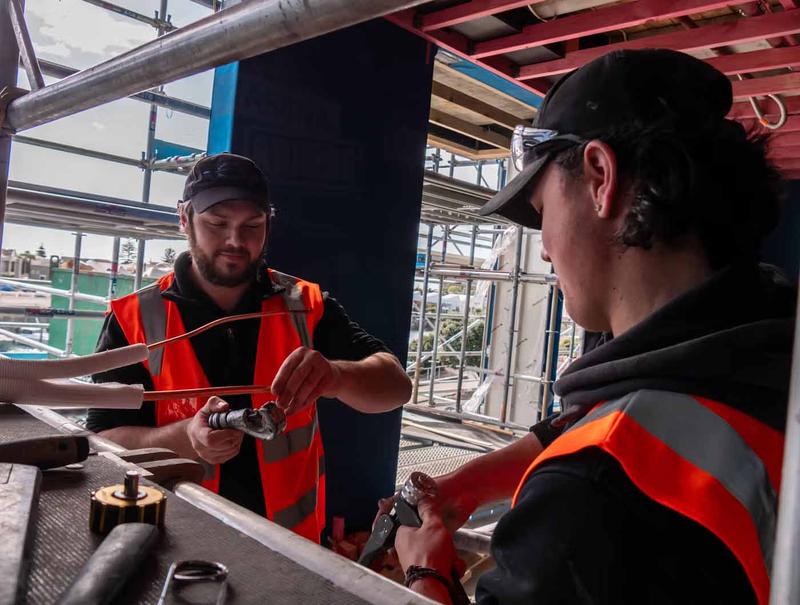
Choosing the right trade pathway matters, especially in a growing area like HVAC&R. Across New Zealand, demand continues to grow for skilled refrigeration, air-conditioning and HVAC technicians as businesses, infrastructure and buildings rely increasingly on climate control and energy-efficient systems. We often hear from learners who know they want to work with refrigeration or cooling systems, but are not yet sure whether the broader Refrigeration and Air Conditioning Apprenticeship or the more focused New Zealand Certificate in Air Conditioning Installation (Trade) (Level 4) is the better fit.
Both are Level 4 pathways. Both are workplace-based. Both can lead to strong long-term careers. The difference is in the scope of work, the type of systems you train on, and where each pathway can take you next. We make that distinction clear, with the apprenticeship covering installation, maintenance and repair across refrigeration and air-conditioning systems, while the air conditioning installation programme focuses on installing and commissioning cooling systems such as split systems, VRF units and packaged systems.
Understanding the Broader Refrigeration and Air Conditioning Apprenticeship
The Refrigeration and Air Conditioning Apprenticeship is the broader trade pathway. It leads to the New Zealand Certificate in Refrigeration and Air Conditioning (Trade) (Level 4), carries 282 credits, and takes about 48 months to complete. It is workplace-based with online and self-study components, can start anytime, and is available NZ-wide.
The training includes environmental and safety standards, installation, commissioning, servicing and repair, diagnosing electrical, refrigerant and mechanical faults, safe handling of refrigerants, including natural refrigerants, HVAC control systems and automation, pipework and brazing, performance testing, and reading refrigeration and air-conditioning technical drawings.
In practical terms, this means you are preparing for a trade that can take you into cool rooms, freezers, industrial chillers, commercial HVAC systems, transport refrigeration, and broader fault-finding and maintenance work. If you are drawn to variety, breakdown work, technical troubleshooting and long-term progression, this pathway generally offers the wider scope.
You can also see how that wider scope connects with industry demand in our earlier article, Where Refrigeration and Air-Conditioning Careers Can Take You in New Zealand, which looks at the sectors, environments and long-term roles available across HVAC&R.
Understanding the Air Conditioning Installation Pathway
The New Zealand Certificate in Air Conditioning Installation (Trade) (Level 4) is more focused. It carries 140 credits, takes about 24 months, and is also workplace-based with online and self-study components, with NZ-wide delivery and rolling starts.
This programme is designed for people who want to specialise in installing and commissioning cooling systems in homes, workplaces and industrial settings. The qualification page describes work across split systems, VRF (Variable Refrigerant Flow) units and packaged systems up to 50 kW nominal cooling, commonly used across residential and light commercial applications. Learners develop capability in assessing site and system requirements, installing split-system, VRF and packaged air-conditioning units, fabricating and fitting ductwork and pipework, commissioning and testing systems, carrying out routine maintenance, testing and servicing activities, applying safe work practices, and communicating with customers and other trades on site.
That makes it a strong fit for people who enjoy installation-focused work, site-based projects, customer interaction and seeing a system go from plan to working result. It is still technical, still hands-on, and still a serious trade pathway, but it does not cover the same full refrigeration scope as the broader apprenticeship.
Installation and commissioning are also major parts of the wider HVAC&R industry, with many businesses specialising in heat pumps, VRF systems, ducted systems and commercial air-conditioning projects. That means there is strong ongoing demand for skilled installers who can deliver high-quality system installations and commissioning work.
The Key Difference Between the Two
The simplest way to think about it is this:
- The Refrigeration and Air Conditioning Apprenticeship prepares you for a broad refrigeration and air-conditioning trade pathway within the wider HVAC&R sector.
- The Air Conditioning Installation Level 4 programme prepares you for installation and commissioning-focused work within that wider space.
The apprenticeship includes servicing, maintenance, repair and fault diagnosis across refrigeration and air-conditioning systems. The installation programme is narrower and centres on installing, testing and maintaining air-conditioning equipment. The air conditioning installation qualification can provide a pathway into the Refrigeration & Air Conditioning (Trade) (Level 4) qualification and the Mechanical Building Services (Trade) (Level 4) qualification, while the broader apprenticeship leads into Mechanical Engineering (Advanced) Level 5.
That progression point matters. If you are thinking long term about advanced technical capability or supervisory development, the broader apprenticeship may suit you better from the start. If you want to get into installation work quickly and build from there, the installation programme may be the right first move.
Who Each Pathway Suits Best
The broader refrigeration and air-conditioning pathway is likely to suit you if you:
- want a wider trade base
- are interested in refrigeration as well as air-conditioning
- enjoy fault-finding and repair work
- want to work across commercial, industrial and specialist systems
- are thinking about long-term progression into advanced or supervisory roles
The Air Conditioning Installation Level 4 programme is likely to suit you if you:
- enjoy installation and commissioning work
- like working with split systems, VRF and packaged units
- want a more focused pathway into cooling systems
- are comfortable working closely with customers and other trades
- want a pathway that can later lead into broader refrigeration or mechanical building services training
Thinking About Long-Term Career Direction
If your goal is to become a broad-based HVAC&R tradesperson, the apprenticeship gives you stronger exposure to servicing, maintenance, repair and refrigeration systems. It is also the clearer path if you see yourself moving into commercial or industrial refrigeration, transport refrigeration, or advanced trade progression later on. ATNZ lists career outcomes such as Refrigeration & Air Conditioning Engineer, HVAC Technician, Commercial or Industrial Refrigeration Engineer, Heat Pump Installer, and Transport Refrigeration Technician for the apprenticeship. For learners interested in heat pump installation, commercial air-conditioning projects, HVAC systems and mechanical services work, the installation pathway can offer a strong long-term trade direction.
If your interest sits more squarely in installation and commissioning, the air conditioning installation pathway is a strong choice. Its listed career outcomes include Air Conditioning Installer, HVAC Technician, Residential or Commercial AC Installer, VRF Installation Technician, Mechanical Building Services Tradesperson, and installer or technician roles within mechanical services companies.
Choosing The Right Fit For You
The right pathway depends on the kind of work you want to do day to day. If you enjoy wider technical coverage, deeper fault-finding and the idea of working across refrigeration and cooling systems in multiple environments, the apprenticeship is usually the better fit. If you are more interested in installation-led work, commissioning systems properly and building a career around cooling solutions, the air conditioning installation pathway may suit you better.
Both are valuable. Both are industry-relevant. Both can lead to long-term careers in an HVAC&R sector that continues to grow across residential, commercial and industrial environments.
Your Next Step In HVAC&R
If you are deciding between the two, start by looking closely at the Refrigeration and Air Conditioning Apprenticeship and the New Zealand Certificate in Air Conditioning Installation (Trade) (Level 4).
Compare the systems, skills and career outcomes, and think about where you want your trade to take you.